
The IRS charges a 40% tax at death on any part of your estate over “the exemption” of $13.61M (as of 2024). Legislation effective 2026 will reduce the exemption roughly by half. Shifting assets out of your estate before death can help you avoid paying millions in taxes and significantly increase the amount you can leave to beneficiaries.
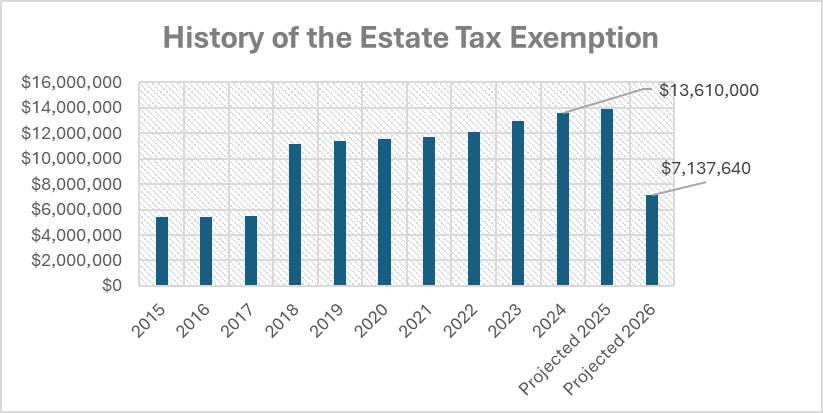
Figure 1: The exemption amount is scheduled to drop significantly in 2026. Lower exemption = Bad
The ramifications are dramatic. A lower exemption means that more of your estate could be subject to tax. In the example below, a $20M estate would see nearly a doubling in taxes paid at death.
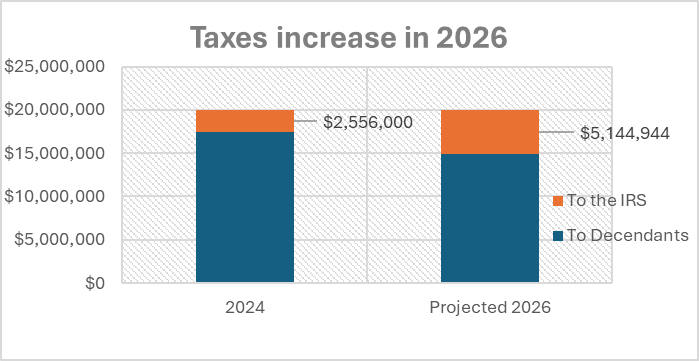
Figure 2: Example: Due to the upcoming tax law change, a $20M estate would incur an additional $2.5M in tax.
How are you maximizing use of the available strategies today to minimize exposure to estate tax?
Annual gifting – individuals can gift $18,000 annually (as of 2024) free of tax. As an example, spouses could gift each of their three children $36,000, reducing their estate by $108,000 annually.
Shifting assets to Irrevocable Trusts – An effective way of reducing potential tax is shifting assets to your irrevocable trust. Irrevocable trusts can own many types of assets, including real estate, brokerage accounts, and more.
Using the Exemption – The current exemption of $13.61M is “use it or lose it”. Meaning, $13.61M is available now, but roughly $7M might only be available in 2026 and beyond. Using $12M now for example will not penalize you even if the exemption drops to $7M.
Estate Planning doesn’t have to be overly complex. Maximizing the use of your estate tax exemption begins with knowing where you’re at and having a proactive plan. Consulting with an advisor and estate attorney can help navigate complexities and tailor a plan that aligns with your individual goals.
Disclosures:
*Projected 2025 and 2026 exemption values were calculated using the average inflation of the exemption from 2011-2024, normalized for the doubling that occurred post 2017, and the halving post 2025. These projections are rough estimates.
All calculations within are performed from scratch and, while diligent efforts are made to ensure accuracy, may contain unaudited errors. The content provided is for informational purposes only and should not be construed as investment advice, an offer, or a solicitation to buy or sell any financial instruments. Readers should consult with a qualified financial advisor for personalized advice tailored to their individual circumstances. All investments are subject to a risk of loss. Diversification and strategic asset allocation do not assure profit or protect against loss in declining markets. These materials do not take into consideration your personal circumstances, financial or otherwise.
Sources:
https://www.irs.gov/businesses/small-businesses-self-employed/estate-tax
 Wealth Studio
Leave a comment