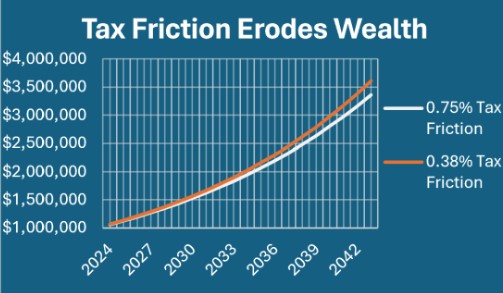
Investors rarely factor in the impact taxes have on their portfolio return. This impact is commonly referred to as tax friction. Simply, tax friction is the way taxes eat away at your investment gains. When you make money from interest, dividends, or selling stocks, you have to pay taxes on those earnings. These taxes reduce the total amount you get to keep and reinvest.
For example, let’s say you have an account that has been growing at 7% annually and is now worth $1M. At the end of the next year, you decide to buy and sell some stock resulting in a tax bill of $8,025. 1 That 7% return is now only 6.19% after you withdraw cash to pay that tax bill. Below is a comparison of the same portfolio but half the annual tax friction. Over time, the savings are measured in the hundreds of thousands.

Harness the Power of Low-Turnover Investment Strategies
Managing tax friction is crucial for getting the most out of your portfolio’s performance. Some amount of tax friction is inevitable, but there are strategies we can use to reduce it.
- Tax Loss Harvesting: selling losing investments with your winners
- Reduce Portfolio Turnover: decrease the frequency investments in a portfolio are sold within a year.
Get in touch with Belmont and mention our tax friction analysis to learn more.
1 This assumes 0.75% of the ending account value – an entirely reasonable amount for a $1M portfolio
Disclaimer
All calculations within are performed from scratch and, while diligent efforts are made to ensure accuracy, may contain unaudited errors. The content provided is for informational purposes only and should not be construed as investment advice, an offer, or a solicitation to buy or sell any financial instruments. Readers should consult with a qualified financial advisor for personalized advice tailored to their individual circumstances. All investments are subject to a risk of loss. Diversification and strategic asset allocation do not assure profit or protect against loss in declining markets. These materials do not take into consideration your personal circumstances, financial or otherwise.
 Wealth Studio
Leave a comment